
Moroccan Wedding Menu: How to Plan a Balanced and Memorable Dining Experience
By ISMAIL IFAKIR · 22 Jul 2026 · 6 min read
The wedding menu has a major influence on the guest experience. It reflects the couple’s hospitality, the quality of the planning, and the attention given to the celebration.
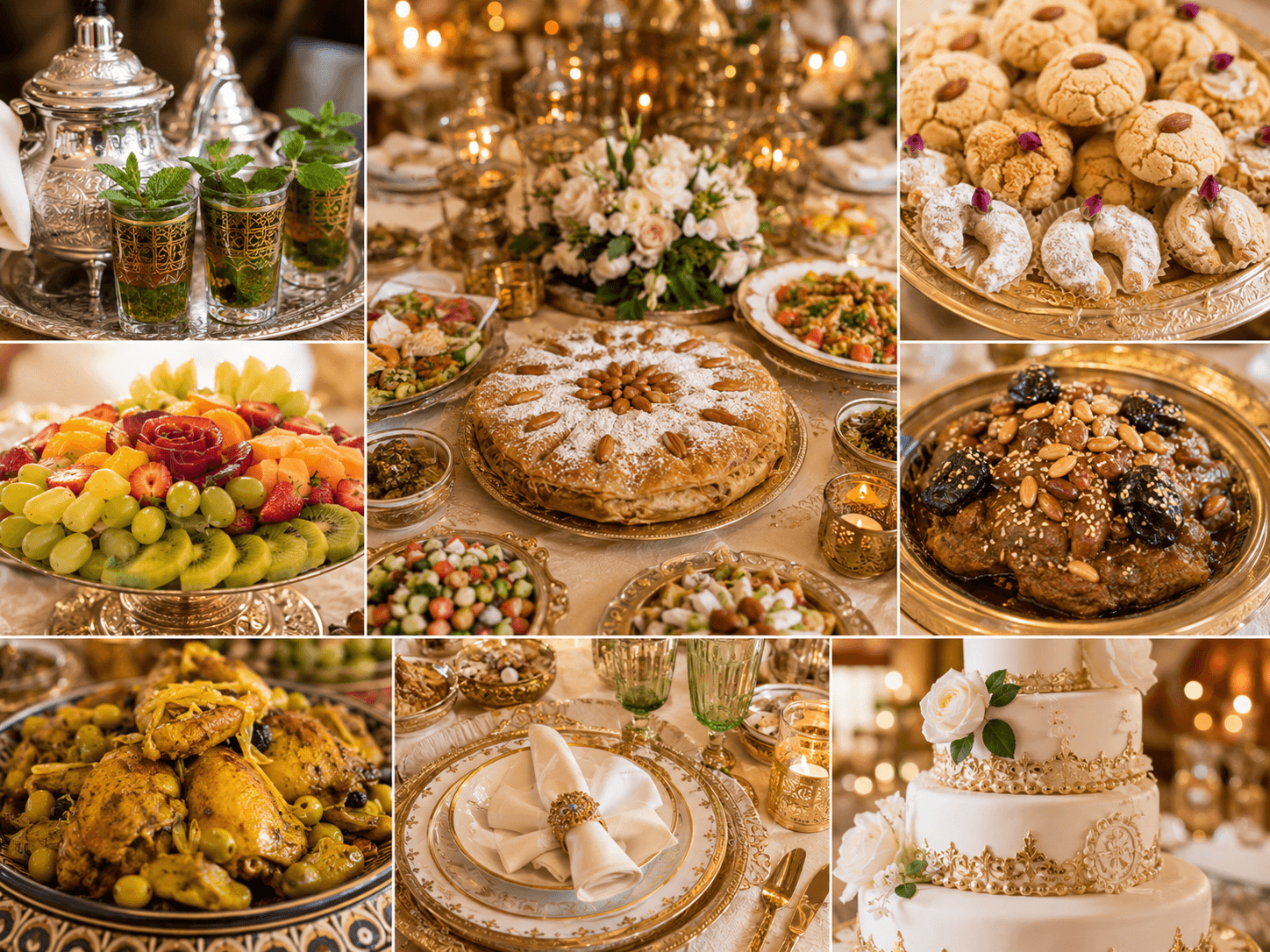
At a Moroccan wedding, food service often begins with tea and pastries and continues through starters, main dishes, fruit, desserts, and drinks.
A successful menu is not necessarily the longest one. Quality ingredients, balanced flavours, attractive presentation, and efficient service matter much more.
Confirm the Guest Count
The number of guests affects the quantities, service style, menu choices, and total budget.
A large wedding requires dishes that can be served consistently and efficiently. A smaller event allows more personalisation and flexibility.
A small quantity margin is helpful, but excessive ordering creates unnecessary waste.
Choose the Service Style
Table service creates a formal and organised atmosphere. Professional staff deliver the dishes directly to each table.
A buffet provides more variety and allows guests to choose their preferred food, but it requires enough room and careful organisation.
Couples may also combine both styles, using a buffet for welcome refreshments and desserts while serving the main meal at the tables.
Welcome Guests With Tea and Pastries
Moroccan mint tea and traditional pastries create a warm and culturally meaningful welcome.
Gazelle horns, ghriba, briouats, fekkas, dates, and almonds are popular choices.
The welcome display should look elegant, and enough staff should be present to serve guests without long waiting times.
Starters and Moroccan Salads
Moroccan salads add freshness and variety to the beginning of the meal.
Zaalouk, taktouka, carrots, beetroot, olives, and mixed salads may be presented in shared dishes or individual portions.
The number of starters should remain balanced so that guests can still enjoy the main courses.
Pastilla as an Opening Dish
Pastilla is one of the most recognisable dishes served at Moroccan weddings.
Couples may choose chicken and almond pastilla or a seafood version.
The portion size should be suitable for the complete menu and should not make the meal feel too heavy too early.
Moroccan Main Courses
Popular main dishes include meat with prunes and almonds, roast chicken, tagines, couscous, and mechoui.
Couples may select one main dish or two complementary courses.
The menu should avoid combining several dishes that are all heavy or too similar in flavour.
Consider Dietary Needs
Some guests may be vegetarian, have food allergies, or need lighter meals.
A simple vegetarian option can make the reception more inclusive. Couples should also understand the key ingredients used in every dish.
Child-friendly meals may be prepared for younger guests.
Select the Desserts
Dessert may combine Moroccan pastries with modern sweets.
Gazelle horns, briouats, ghriba, fekkas, chocolates, and individual cakes are all suitable choices.
The selection should offer different flavours and textures without becoming unnecessarily large.
The Wedding Cake
The wedding cake is both a dessert and a ceremonial feature.
Its size should match the guest count while taking the other desserts into consideration.
The design may follow the wedding colours or include subtle Moroccan decorative details.
Fruit and Drinks
Seasonal fruit provides a refreshing conclusion to the meal, especially during warmer months.
Water, juice, soft drinks, tea, and coffee should be available in sufficient quantities.
Drinks must be kept at the correct temperature and replenished regularly.
Match the Menu to the Season
Summer weddings benefit from lighter dishes, salads, fresh fruit, and cold drinks.
Winter celebrations may include richer tagines, meat dishes, and warm beverages.
Seasonal ingredients often provide better quality and more reasonable prices.
Consider the Event Time
A daytime wedding may require a lighter meal than an evening reception.
Food service should be coordinated with the couple’s entrances, music, amariya ceremony, and photography schedule.
A shared programme helps the caterer serve every course at the correct time.
Arrange a Tasting Session
A tasting gives the couple an opportunity to evaluate flavour, ingredient quality, presentation, and portion size.
They should taste the actual dishes planned for the wedding rather than an unrelated sample menu.
The tasting is also the right time to request changes to seasoning, sweetness, cooking, or accompaniments.
Choose the Right Caterer
Review the caterer’s previous work, client feedback, and experience with weddings of a similar size.
Ask how the food will be prepared, transported, stored, and served.
The caterer should follow strict hygiene standards and provide enough trained staff.
Confirm the Number of Servers
Insufficient staff can lead to slow service and major differences between tables.
The quotation should specify the number of servers, supervisors, and kitchen team members.
A clear contact person should be available during the celebration.
Coordinate Table Design With Food Service
Tables should have enough room for plates, glasses, shared dishes, and decorations.
When food is served in shared platters, the centre of the table must remain relatively open.
Tall flowers and large decorative objects should not interfere with the staff or guest visibility.
Food Safety and Hygiene
Hot and cold food must be stored and served at safe temperatures.
The kitchen, serving tools, dishes, and staff clothing should all be clean.
Food safety should never be compromised to reduce costs.
Calculate the Quantities
Quantities depend on the number of guests, number of courses, service style, and event duration.
An experienced caterer can recommend sufficient portions while limiting waste.
Couples should also discuss what will happen to unused or unserved food.
Set the Catering Budget
Food and hospitality often represent a significant part of the wedding budget.
Costs may be reduced by selecting fewer high-quality dishes, choosing seasonal products, and avoiding excessive dessert duplication.
The couple should confirm whether the price includes staff, transport, drinks, dishes, furniture, and cleaning.
Compare Catering Packages
Price should not be the only comparison point. Couples should review ingredient quality, portion sizes, staffing, presentation, drinks, and included equipment.
A higher-priced offer may provide better value when it includes pastries, beverages, staff, and serving materials.
A detailed written quotation makes comparison easier.
Sign a Detailed Agreement
The contract should state the guest count, menu, service times, staff, total cost, and cancellation policy.
Vegetarian meals, children’s meals, beverages, and special requests should also be included.
Important agreements should always be recorded in writing.
Mistakes to Avoid
Avoid selecting too many dishes without a clear sequence, prioritising quantity over quality, or failing to coordinate the meal with the wedding schedule.
Couples should not serve food they have never tasted or overlook children and guests with special dietary needs.
Any major change in the guest count should be communicated promptly.
Build a Balanced Menu
A balanced menu may begin with tea and pastries, followed by salads, an opening dish, a main course, fruit, desserts, and drinks.
The menu should feel coherent and enjoyable from beginning to end.
Quality and organisation are more important than offering a very long list of dishes.
Why Does the Wedding Menu Matter?
Good food makes guests feel welcomed, comfortable, and appreciated.
When the menu is well planned and the service runs smoothly, dining becomes one of the most memorable parts of the wedding.
Through Afrahi, couples can discover Moroccan catering services, compare menus and packages, and select an option that matches their guest count, wedding style, and budget.