
Moroccan Engagement: Family Traditions and the Beginning of a Beautiful Journey
By ISMAIL IFAKIR · 22 Jul 2026 · 7 min read
A Moroccan engagement is an important stage before marriage. It is not only an announcement of the couple’s commitment, but also an opportunity to bring their families together and begin building a respectful relationship between them.
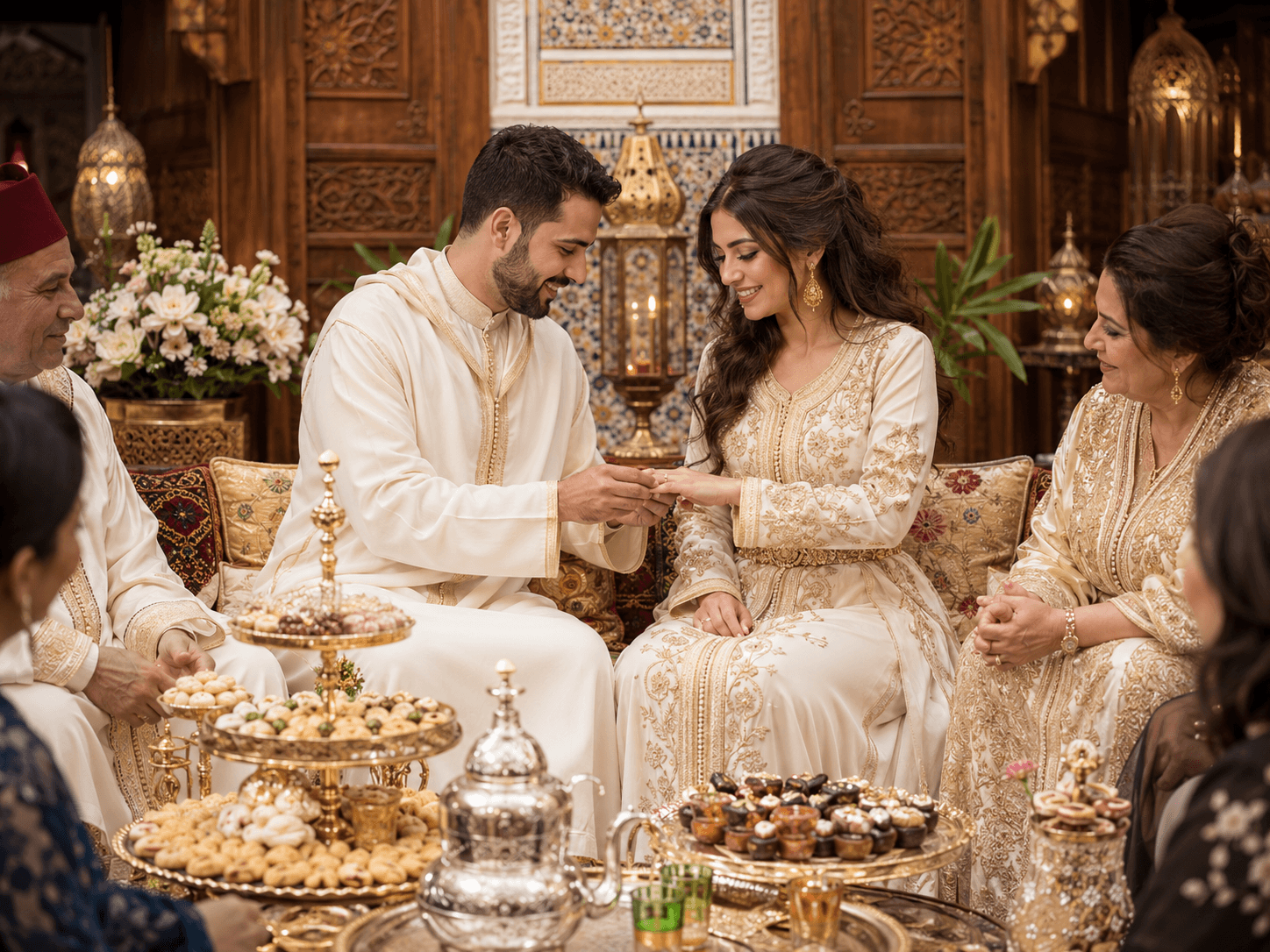
The celebration may be a small gathering at the family home, a reception in a venue, or an elegant event in a traditional Moroccan riad. Its size and details vary between regions and families, but it remains associated with joy, hospitality, and preparation for married life.
- The Importance of Engagement in Moroccan Culture
An engagement often represents the first official step connecting the two families. It allows relatives to meet, exchange congratulations, and begin discussing the wedding preparations.
There is no single format for a Moroccan engagement. Regional customs, family traditions, and the couple’s preferences all influence the celebration.
Hospitality, generosity, and mutual respect are nevertheless central to most engagement occasions.
- The Meeting Between the Families
In many families, an official visit takes place before the engagement celebration. The future groom visits the bride’s home with his parents or close relatives to express his intention to marry her.
Moroccan tea, pastries, and sometimes a meal are served during the visit. The families may discuss their expectations and the next steps in a calm atmosphere.
This meeting helps establish a positive relationship between both families.
- Defining the Style of the Celebration
Before making reservations, the couple should decide whether they want a private family gathering or a larger reception with relatives and friends.
The guest count, budget, and venue will inform decisions about decorations, attire, catering, photography, and entertainment.
A small celebration can be as elegant and memorable as a large one when it is thoughtfully organised and reflects the couple’s personality.
- Choosing the Venue
A Moroccan engagement can be held at the family home, in an event hall, at a restaurant, or in a traditional riad.
The family home is ideal for intimate gatherings, while an event hall provides more space for larger guest lists. A riad provides a setting that combines Moroccan character with elegance.
The couple should consider capacity, location, accessibility, parking, lighting, catering facilities, and photography opportunities.
- The Bride-to-Be’s Outfit
The bride-to-be often wears a Moroccan caftan or takchita that suits the style and size of the occasion.
A soft and refined outfit may be ideal for a family gathering, while a richly embroidered design may suit a formal reception.
Powder pink, ivory, green, blue, and gold are popular choices, but the bride should select a colour that complements her skin tone and makes her feel confident.
The belt, jewellery, hairstyle, and makeup should work together without making the look feel overcrowded.
- The Groom-to-Be’s Outfit
The groom-to-be may wear a formal suit, a Moroccan jabadour, or an elegant djellaba, depending on the event.
Some couples coordinate colours or details in their outfits to create a harmonious appearance in photographs.
His clothing should be comfortable and appropriate for the venue and level of formality.
- The Engagement Ring
The ring symbolises commitment and the promise of marriage. It may be presented during the official family visit or at the celebration in front of the guests.
The choice depends on the bride’s taste and the couple’s budget. Comfort, quality, and personal style are more important than size or price.
The couple may choose the ring together, or the groom may prepare a surprise after learning the bride’s preferences and correct ring size.
- Traditional Gifts
The groom’s family may bring gifts such as Moroccan sweets, dates, perfume, fabrics, clothing, flowers, cosmetics, a caftan, or the engagement ring.
These gifts may be arranged on decorated trays or in traditional containers known in some areas as tayfar.
Their meaning is more important than their monetary value. They represent care, respect, and appreciation between the families.
- Engagement Decoration
The decoration can follow a simple colour palette such as white and gold, pink and beige, or green and ivory.
Flowers, candles, lanterns, decorative fabrics, and an elegant seating area can transform the venue. A personalised photo corner featuring the couple’s names or initials may also be included.
The design should suit the size of the space. A balanced and uncluttered arrangement often looks more elegant than excessive decoration.
- Moroccan Hospitality and Food
Hospitality is an essential part of a Moroccan engagement. Mint tea is usually served with traditional pastries such as gazelle horns, briouats, ghriba, and fekkas.
Depending on the time and size of the celebration, the family may offer dinner, a buffet, or light refreshments.
Pastilla, meat with prunes, chicken dishes, salads, dates, and dried fruits are common options. Quantities should be planned according to the confirmed guest count.
- Music and Atmosphere
Music may be soft and simple or provided by a small live group or DJ.
Moroccan songs, clapping, and ululations can accompany the couple’s entrance, the presentation of the ring, and the arrival of the gifts.
The sound level should allow guests to talk comfortably and enjoy the family atmosphere.
- Photography and Video
Photographs preserve the beginning of the couple’s official journey. A photographer can document the families’ arrival, the ring presentation, the traditional gifts, and portraits of the couple.
The service duration, number of photographs, delivery format, album, and video options should be confirmed before booking.
- Planning the Event Programme
A simple programme may include welcoming the guests, the couple’s entrance, the ring presentation, photographs, gift presentation, and refreshments or dinner.
The celebration does not require many activities. Enough time should be left for the families to talk and enjoy the occasion.
A relative or event coordinator can manage the schedule and communicate with the service providers.
- Setting the Budget
The engagement budget should be decided before reservations and purchases begin. It can be divided between the venue, outfits, catering, decoration, photography, music, and gifts.
The couple should prioritise the elements that matter most to them and avoid unnecessary expenses.
Keeping a small amount for unexpected costs, such as additional guests, transport, or last-minute decoration changes, is also useful.
- Discussing the Next Steps
The engagement provides an opportunity for the couple and their families to discuss the approximate wedding date, the type of ceremony, and the main preparation stages.
These conversations should remain respectful and consider the couple’s circumstances and both families’ financial possibilities.
The aim is to build understanding and cooperation rather than create pressure or competition.
- Mistakes to Avoid
One common mistake is inviting too many guests before confirming the venue capacity and budget.
Couples should also avoid making reservations before agreeing on the size and style of the event.
Comparing the celebration with other engagements may lead to unnecessary spending. Every couple should organise an occasion that reflects their own needs and circumstances.
- A Modern Moroccan Engagement
Many couples now combine Moroccan traditions with modern elements. They may use digital invitations, contemporary flower arrangements, personalised signs, or modern dessert tables while preserving the caftan, mint tea, family gathering, and traditional gifts.
Modernising the occasion does not require abandoning tradition. It allows the couple to present it in a way that reflects their personality and lifestyle.
- Why Is a Moroccan Engagement So Memorable?
A Moroccan engagement combines the emotion of commitment, the warmth of family, and the beauty of cultural traditions.
When organised with clear priorities and thoughtful planning, it becomes a joyful occasion without unnecessary stress.
Through Afrahi, couples can discover engagement venues, caftan designers, photographers, caterers, and decorators, compare their services, and organise a celebration that matches their style and budget.