
Moroccan Wedding Decoration: How to Create an Elegant Celebration Combining Tradition and Modern Style
By ISMAIL IFAKIR · 22 Jul 2026 · 6 min read
Wedding decoration gives the celebration its visual identity and creates the atmosphere experienced by guests. It is often the first thing people notice when entering the venue and appears throughout the wedding photographs and videos.
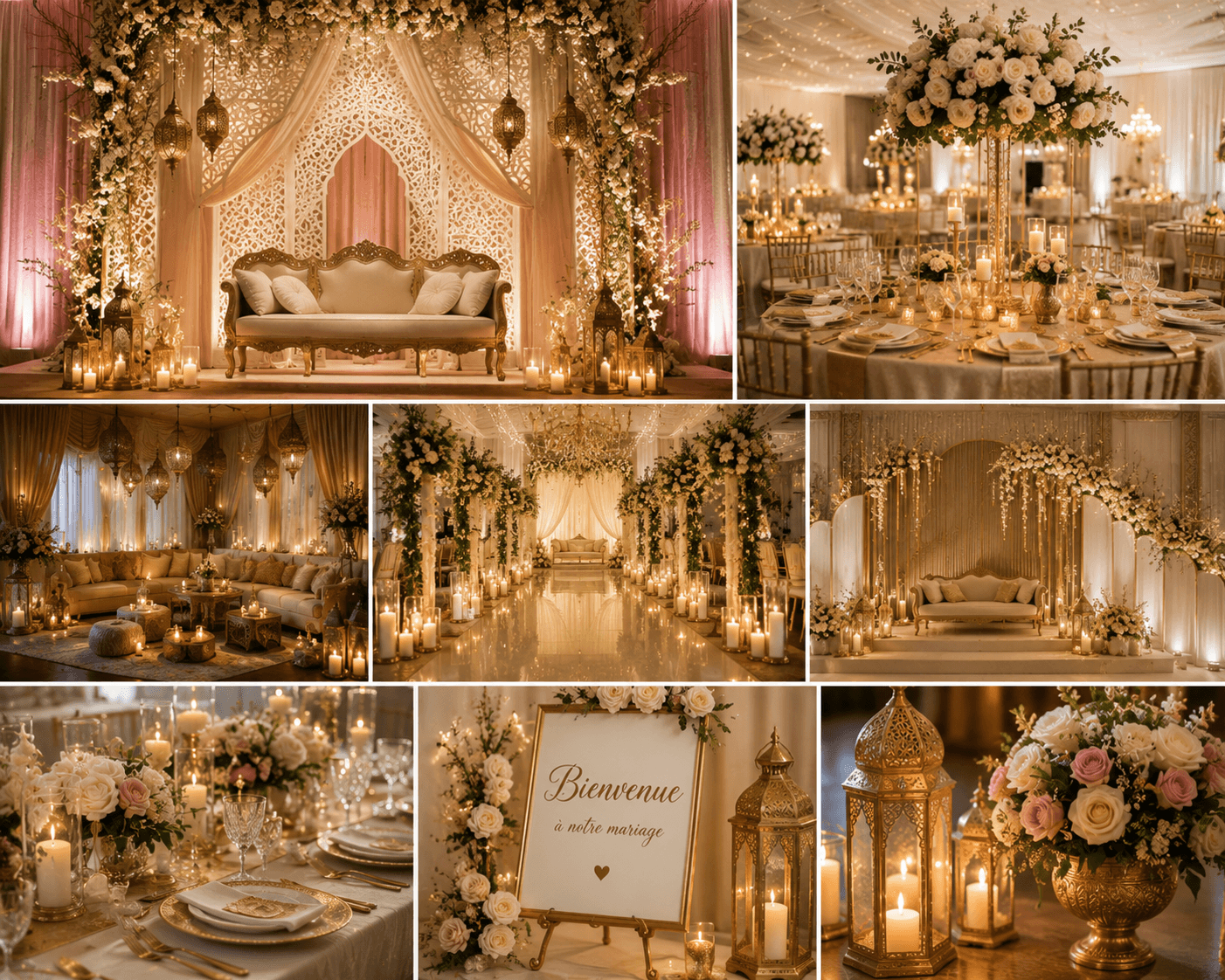
Decoration includes more than the couple’s stage. It also covers the entrance, aisle, tables, chairs, flowers, lighting, photography area, and hospitality spaces.
A Moroccan wedding can combine traditional lanterns, arches, carved details, and rich fabrics with modern floral arrangements and softer colour palettes. The most successful result comes from balance and consistency rather than excessive decoration.
Define the Wedding Style
Before contacting a decorator, the couple should decide whether they prefer a traditional, modern, romantic, minimalist, or mixed style.
A traditional Moroccan design may use brass lanterns, carved arches, patterned details, and colours such as gold, green, and burgundy.
A modern design may feature clean lines, light colours, delicate flowers, and subtle lighting.
Defining the style early helps ensure that every element belongs to the same visual concept.
Choose a Colour Palette
It is usually best to select two or three main colours and use different shades of them throughout the decoration.
White, ivory, and gold create a refined atmosphere. Beige and green produce a natural appearance, while burgundy, royal blue, and purple can create a more dramatic setting.
The selected colours should also suit the venue’s walls, floor, curtains, and existing furniture.
Decorate the Entrance
The entrance introduces the wedding style to the guests. It may include a floral arch, Moroccan lanterns, soft curtains, or a personalised welcome sign.
A small table may hold the guest book, wedding favors, or welcome items.
The design should remain open enough to allow comfortable guest movement.
Design the Bridal Aisle
The aisle may be decorated with flowers, lanterns, electric candles, or floor lighting.
It should be wide enough for the bride’s dress, photographers, and the amariya entrance.
All decorative elements should be stable and positioned safely.
Create the Couple’s Stage
The stage is the focal point of the venue and the main background in many photographs.
It may include Moroccan arches, floral arrangements, curtains, lighting, and comfortable seating.
The background colours should work with the bride’s different outfits. The platform and steps must also be safe and easy to use.
Style the Guest Tables
Table decoration should look attractive without preventing guests from seeing one another.
Low floral arrangements, lanterns, candles, or small Moroccan objects can provide an elegant result.
Tablecloths, napkins, plates, glasses, and table numbers should all follow the chosen palette.
Natural or Artificial Flowers
Natural flowers provide freshness and fragrance but may be more expensive and sensitive to heat.
High-quality artificial flowers are useful for large arches and installations because they keep their appearance throughout the event.
Many couples combine both options, using natural flowers for tables and key areas and artificial flowers for larger structures.
Use Lighting Effectively
Lighting highlights the decoration and shapes the atmosphere. Warm light creates a romantic feeling, while focused lighting draws attention to the stage and aisle.
Strong coloured lighting should be used carefully because it can change skin tones and outfit colours in photographs.
The decorator and photographer should therefore coordinate their lighting plans.
Add Moroccan Details
Lanterns, zellige patterns, carved arches, handcrafted tables, cushions, and traditional vessels can introduce Moroccan identity.
Not every traditional element needs to be used. A few carefully selected pieces may create a stronger and more elegant result.
A traditional photo corner can also be added to an otherwise modern wedding design.
Create a Modern, Minimal Look
Modern decoration often relies on neutral colours, simple lines, and a limited number of carefully chosen elements.
White, beige, pale pink, and natural green can be combined with light floral arrangements and elegant furniture.
Simple decoration can appear extremely luxurious when the materials, spacing, and lighting are well planned.
Add a Photography Corner
A photography corner gives guests a separate place to take pictures.
It may feature a floral wall, Moroccan arch, illuminated curtain, personalised sign, or traditional seating area.
The space should have good lighting and should not block guest movement.
Decorate the Dessert Table
The cake, sweets, tea, and drinks table can follow the same visual style as the venue.
Decorative trays, different heights, lanterns, flowers, and labels can improve the presentation.
Enough practical space must remain for serving and replacing food.
Select Chairs and Linen
Chair design and table linen strongly influence the final appearance of the room.
Ribbons, small flowers, or personalised cards may be added to selected chairs, especially those reserved for the couple and close family.
Tables should remain stable and spacious enough for food service.
Match the Decoration to the Venue
Small venues need lighter decoration that does not reduce walking space.
Large venues can accommodate taller arrangements and more substantial installations.
The decorator should visit the venue and measure the ceiling, entrance, stage area, and table layout.
Coordinate With the Bride’s Outfits
The stage background should complement the bride’s caftans, takchitas, and white dress.
Neutral decoration may be best when the outfits are colourful. Stronger decoration colours may work well with light or understated outfits.
This coordination makes a major difference in wedding photographs.
Consider Sustainable Decoration
Reusable lanterns, vessels, structures, and high-quality artificial flowers can reduce waste.
Seasonal and locally sourced flowers may also be more environmentally responsible and affordable.
After the wedding, flower arrangements can be given to family members or reused.
Choose the Right Decorator
Review complete projects from real weddings rather than relying only on inspiration photographs.
Confirm whether the package includes flowers, the stage, table arrangements, lighting, transport, installation, and removal.
The setup time and team availability should also be agreed upon.
Compare Detailed Packages
Two packages that look similar may use very different flowers, materials, and structures.
Ask for precise information about everything included and request a written quotation.
A sketch, visual concept, or reference image can help both sides understand the expected result.
Sign a Clear Contract
The contract should include the date, venue, selected colours, decoration style, services, price, setup time, and removal schedule.
It should also explain how changes to the number of tables, location, or design will be handled.
Important decisions should always be recorded in writing.
Mistakes to Avoid
Do not copy an online design without considering the venue size, ceiling height, and available budget.
Avoid mixing too many colours and themes, using tall centrepieces that block guests’ views, or selecting lighting that harms photography.
The entrance, stage, tables, and lighting should receive balanced attention.
Reduce Decoration Costs
Couples can select seasonal flowers, mix natural and artificial arrangements, or focus their budget on highly visible areas.
Existing venue decoration may also be used when it matches the wedding theme.
A simple, coherent design is often more elegant and affordable than a crowded concept.
Why Does Wedding Decoration Matter?
Good decoration transforms an ordinary venue into a meaningful environment that reflects the couple’s style.
It improves photography, highlights the stage, guides guest movement, and connects every part of the celebration through one visual identity.
Through Afrahi, couples can discover Moroccan wedding decorators, review their work, compare packages, and select a design that suits their venue, style, and budget.