
Caftan and Takchita: How to Choose the Moroccan Bride’s Outfits
By ISMAIL IFAKIR · 22 Jul 2026 · 7 min read
The caftan and takchita are among the most recognisable symbols of Moroccan elegance. They play a central role in weddings and formal celebrations, reflecting the richness of Moroccan fabrics, embroidery, craftsmanship, and jewellery.
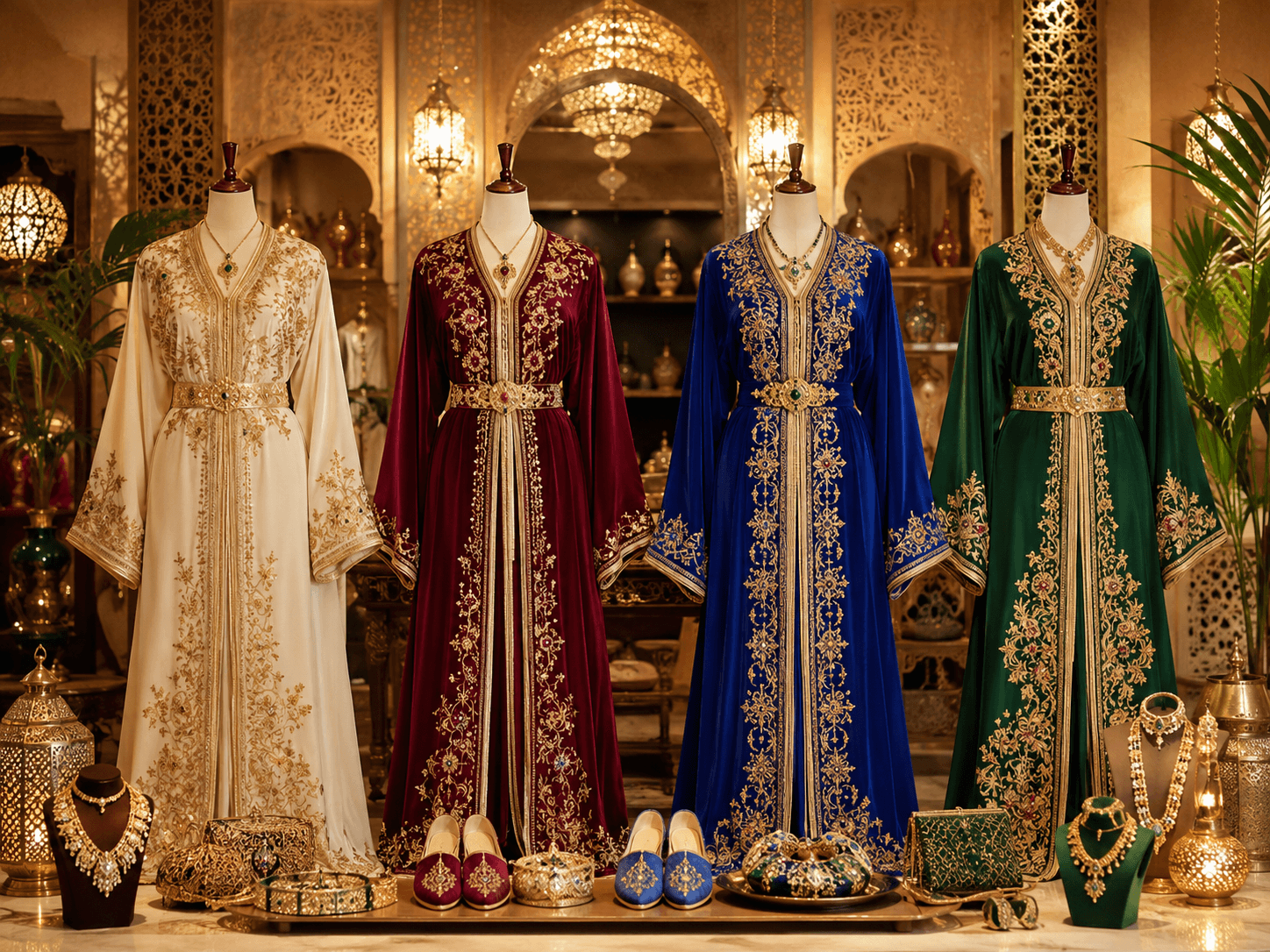
Many brides choose several looks for their wedding, combining a classic caftan with a more ceremonial takchita and, in some cases, outfits inspired by different Moroccan regions.
A successful bridal look does not depend on the number of outfits. Quality, comfort, fit, colour, and coordination with jewellery, makeup, and hairstyle are much more important.
What Is the Difference Between a Caftan and a Takchita?
A Moroccan caftan is generally a single long garment featuring an elegant cut and traditional decorative details. It may be worn with a Moroccan belt to define the waist.
A takchita usually consists of two coordinated layers: an inner dress and a decorated outer layer known as the dfina. It is commonly completed with a formal belt and bridal jewellery.
Neither garment is automatically better than the other. The right choice depends on the bride’s style, the moment of the ceremony, and the level of comfort she needs.
The Caftan’s Role in a Moroccan Wedding
The caftan is often valued for its elegant shape and relative ease of movement. It can be suitable for welcoming guests, an engagement celebration, a henna night, or one of the bride’s first wedding appearances.
It may feature light embroidery for a modern look or detailed decoration with stones, beads, and metallic thread for a more formal result.
The bride should be able to walk, sit, and move comfortably while wearing it.
The Takchita as a Prestigious Bridal Look
The takchita is frequently selected for a main wedding appearance because its layered structure creates a luxurious and ceremonial effect.
The outer dfina may contrast with the inner dress through colour, fabric, or embroidery. This creates visual depth and gives the outfit a strong presence.
A takchita may be worn during the amariya entrance or another important moment. Despite its decorative richness, it should not be excessively heavy or difficult to wear.
Choosing the Right Colours
The bride should choose colours according to her skin tone, the venue lighting, the decoration, and the time of the celebration.
Emerald green, royal blue, burgundy, and gold can create a luxurious appearance. Ivory, powder pink, beige, and light blue often produce a softer result.
Following seasonal trends is optional. The best colour is the one that highlights the bride’s features and makes her feel confident.
The outfit should also be examined under different lighting conditions, as artificial light and photography may change how the colour appears.
Selecting Fabric for the Season
Fabric affects both appearance and comfort. Lightweight materials are generally suitable for summer weddings, while thicker fabrics may work well in colder seasons.
Silk, velvet, brocade, chiffon, and decorated woven fabrics are common choices, depending on the design.
Before confirming the material, the bride should make sure it does not cause excessive heat or irritation and that it maintains its shape during movement.
Moroccan Embroidery and Craftsmanship
Caftans and takchitas are known for decorative techniques such as sfifa, aqad, embroidery, beadwork, and stone embellishment.
Dense decoration creates a luxurious effect but can make the garment heavier. Lighter embroidery may be more suitable for a bride who prefers refined simplicity.
The stitching, fastenings, stones, and finishing around the sleeves, neckline, and dfina edges should all be inspected carefully.
Fit and Alterations
Even the most beautiful design will not look correct when the fit is unsuitable. The garment should follow the bride’s shape without being uncomfortably tight or excessively loose.
An initial fitting should identify the necessary alterations, followed by a final fitting shortly before the wedding.
The bride should check the garment length, sleeve width, belt position, closures, and ease of movement. She should also wear the shoes intended for the wedding during the fitting.
The Moroccan Belt
The Moroccan belt, often called a mdamma, defines the waist and completes many caftan and takchita looks.
It may be metallic, covered in matching fabric, or decorated with embroidery and stones. Its design should complement the outfit and jewellery.
The belt must also be comfortable. A piece that is too tight or heavy can become difficult to wear during a long celebration.
Coordinating Jewellery and Accessories
A richly embroidered outfit does not always require large amounts of jewellery. Elegant earrings and a simple crown may be enough.
A quieter design may be enhanced with a statement necklace, decorative belt, or more noticeable headpiece.
The bride should consider her face shape, hairstyle, neckline, and the weight of the jewellery. Every accessory should be tried before the wedding.
Choosing a Cut for the Bride’s Shape
The bride should select a cut that suits her body and makes her feel confident rather than choosing a design only because it is popular.
Vertical lines can create a more elongated appearance, while a well-positioned belt can define the waist. The location and size of embroidery also affect the visual balance.
An experienced designer or tailor can recommend suitable adjustments without changing the identity of the garment.
How Many Outfits Does a Bride Need?
The number of looks depends on the wedding duration, budget, and schedule.
One bride may choose a caftan, a takchita, and a white wedding dress. Another may add an outfit representing her regional heritage.
Each outfit change requires time for dressing, jewellery, and photography. Two or three carefully organised looks may be more successful than many rushed changes.
Custom-Made or Rental?
A custom-made garment allows the bride to select the fabric, colour, embroidery, and fit. She can also keep the outfit after the wedding. However, this option requires more time, several fittings, and potentially a larger budget.
Rental provides access to multiple luxurious outfits without purchasing each one. It can be suitable for brides who want different styles during the celebration.
For rentals, inspect the garment’s condition, confirm the reservation date, and understand the return policy. For custom work, establish clear fitting and delivery dates.
Mistakes to Avoid
A bride should not choose an outfit solely because it looks attractive in a photograph. Comfort, fit, and movement are equally important.
Heavy jewellery combined with highly detailed embroidery can create an overcrowded appearance. Colours may also look different under venue lighting.
The final fitting should never be delayed until the wedding day, because length, belt, or stitching problems may require time to correct.
Maintaining Comfort During the Celebration
The bride should be able to enjoy her wedding without being distracted by uncomfortable clothing. Suitable shoes, breathable fabrics, and a properly fitted belt make a significant difference.
Enough time should be allocated for every outfit change, and an experienced assistant should help with the garment and jewellery.
A comfortable bride moves more naturally, feels more confident, and appears more relaxed in photographs.
Why Do the Caftan and Takchita Remain Essential?
The caftan and takchita carry an important part of Moroccan identity through their fabrics, embroidery, belts, and jewellery. They continue to evolve with fashion while preserving their traditional character.
They allow the bride to express her personal style while celebrating Moroccan cultural heritage.
Through Afrahi, brides can discover designers, tailors, neggafas, and rental boutiques, compare collections, and select outfits that match their wedding style, comfort needs, and budget.